DonateMembershipVisit Heritage
  • Tūrangawaewae
    Places
  • Tira Māori
    Māori Heritage
  • Poutairangahia
    Archaeology
  • Rauemi
    Resources
  • Mō Tātou
    About Us
  • New Zealand Heritage List
  • Nominate and submit
  • Explore the List
  • National Historic Landmarks
  • Plaques
  • Rainbow List Project
  • Lost heritage
  • Visit Heritage
  • Our properties
  • Turnbull House Project
  • Collections
  • Shop
  • Tohu Whenua
  • Tira Māori
  • Conserving Māori heritage
  • Marae built heritage
  • Māori heritage on the List
  • Hinemihi—Te Hokinga Mai
  • What is archaeology?
  • Is there a site on my property?
  • What are my legal requirements?
  • Affecting an archaeological site
  • Declaring an archaeological site
  • Archaeology FAQs
  • Archaeology Digital Library
  • Archaeology guidelines and templates
  • Resources
  • Funding
  • Publications
  • Sustainable management guides
  • Disaster recovery
  • Podcasts & digital resources
  • Education Hub
  • Conservation plans
  • About
  • Board
  • Māori Heritage Council
  • Senior Staff
  • Offices
  • Contact us
  • Careers
  • Covenants
  • Fast-track
  • Corporate documents
  • Currently consulting on
  • Our submissions
  • News
  • Covid-19 response
Quick links
Rārangi Kōrero | The List
Explore the List
National Historic Landmarks
Ngā Manawhenua o Aotearoa me ōna Kōrero Tūturu
Quick links
Tapuwae
A Vision for Places of Māori Heritage
Funding for Māori Heritage
Resources
Quick links
Archaeological Authority Portal
Applying for an archaeological authority
Archaeology FAQs
Browse the most frequently asked questions about archaeological authorities and the archaeological process.
Quick links
Quick links
News
News Keep up to date with Heritage New Zealand Pouhere Taonga
Membership
Membership Find out more and sign up today
DonateMembershipVisit Heritage
  • Tūrangawaewae
    Places
  • Tira Māori
    Māori Heritage
  • Poutairangahia
    Archaeology
  • Rauemi
    Resources
  • Mō Tātou
    About Us
  • New Zealand Heritage List
  • Nominate and submit
  • Explore the List
  • National Historic Landmarks
  • Plaques
  • Rainbow List Project
  • Lost heritage
  • Visit Heritage
  • Our properties
  • Turnbull House Project
  • Collections
  • Shop
  • Tohu Whenua
  • Tira Māori
  • Conserving Māori heritage
  • Marae built heritage
  • Māori heritage on the List
  • Hinemihi—Te Hokinga Mai
  • What is archaeology?
  • Is there a site on my property?
  • What are my legal requirements?
  • Affecting an archaeological site
  • Declaring an archaeological site
  • Archaeology FAQs
  • Archaeology Digital Library
  • Archaeology guidelines and templates
  • Resources
  • Funding
  • Publications
  • Sustainable management guides
  • Disaster recovery
  • Podcasts & digital resources
  • Education Hub
  • Conservation plans
  • About
  • Board
  • Māori Heritage Council
  • Senior Staff
  • Offices
  • Contact us
  • Careers
  • Covenants
  • Fast-track
  • Corporate documents
  • Currently consulting on
  • Our submissions
  • News
  • Covid-19 response
Quick links
Rārangi Kōrero | The List
Explore the List
National Historic Landmarks
Ngā Manawhenua o Aotearoa me ōna Kōrero Tūturu
Quick links
Tapuwae
A Vision for Places of Māori Heritage
Funding for Māori Heritage
Resources
Quick links
Archaeological Authority Portal
Applying for an archaeological authority
Archaeology FAQs
Browse the most frequently asked questions about archaeological authorities and the archaeological process.
Quick links
Quick links
News
News Keep up to date with Heritage New Zealand Pouhere Taonga
Membership
Membership Find out more and sign up today
  • Places
  • Nominate and submit
  • National Historic Landmarks
  • Places
  • Nominate and submit
  • National Historic Landmarks
  • Tira Māori
  • Conserving Māori heritage
  • Marae built heritage
  • Tira Māori
  • Conserving Māori heritage
  • Marae built heritage
  • Archaeological authorities
  • Archaeology Digital Library
  • Archaeological authorities
  • Archaeology Digital Library
  • All resources
  • Publications
  • Funding
  • All resources
  • Publications
  • Funding
  • FAQs
  • FAQs
Follow us on:
Places
  • Places
  • Nominate and submit
  • National Historic Landmarks
Tira Māori
  • Tira Māori
  • Conserving Māori heritage
  • Marae built heritage
Archaeology
  • Archaeological authorities
  • Archaeology Digital Library
Resources
  • All resources
  • Publications
  • Funding
FAQs
  • FAQs
Follow us on
HomePrivacyTerms and conditionsAbout this site
© Heritage New Zealand Pouhere Taonga 2026.
 
Upper Hutt Blockhouse (Former)

Blockhouse Lane, Trentham, UPPER HUTT

Public

Historic Place Category 1

List No. 207

Quick links:
List GalleryLocationDetails
The Upper Hutt Blockhouse was built in Trentham, Upper Hutt in 1860 and is one of a number of defences built in the Wellington area in response to a perceived threat of Māori attack on Pākehā settlers. Its construction illustrates the deterioration in relations between Māori and Pākehā in the 1860s and it is a very rare surviving example of this type of defensive building in New Zealand. The place is also historically significant as the legal protection given in 1916 is one of the first recorded examples of statutory protection of a historic building in New Zealand.

Fighting in the Taranaki area in 1860 caused Hutt settlers to fear attack by local Māori. There were alleged disturbances in and around the Wellington and Wairarapa districts and rumours that Wairarapa Māori were planning to advance over the Rimutakas. Alarmed settlers held a series of meetings in the Hutt Valley, and it was decided to build two blockhouses as a precautionary measure – one in Upper Hutt and one in Lower Hutt.

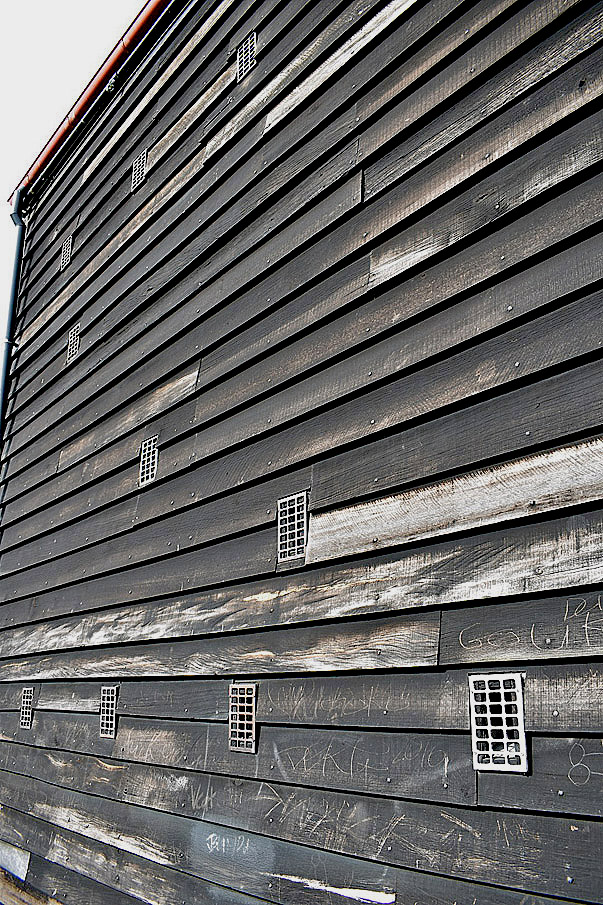
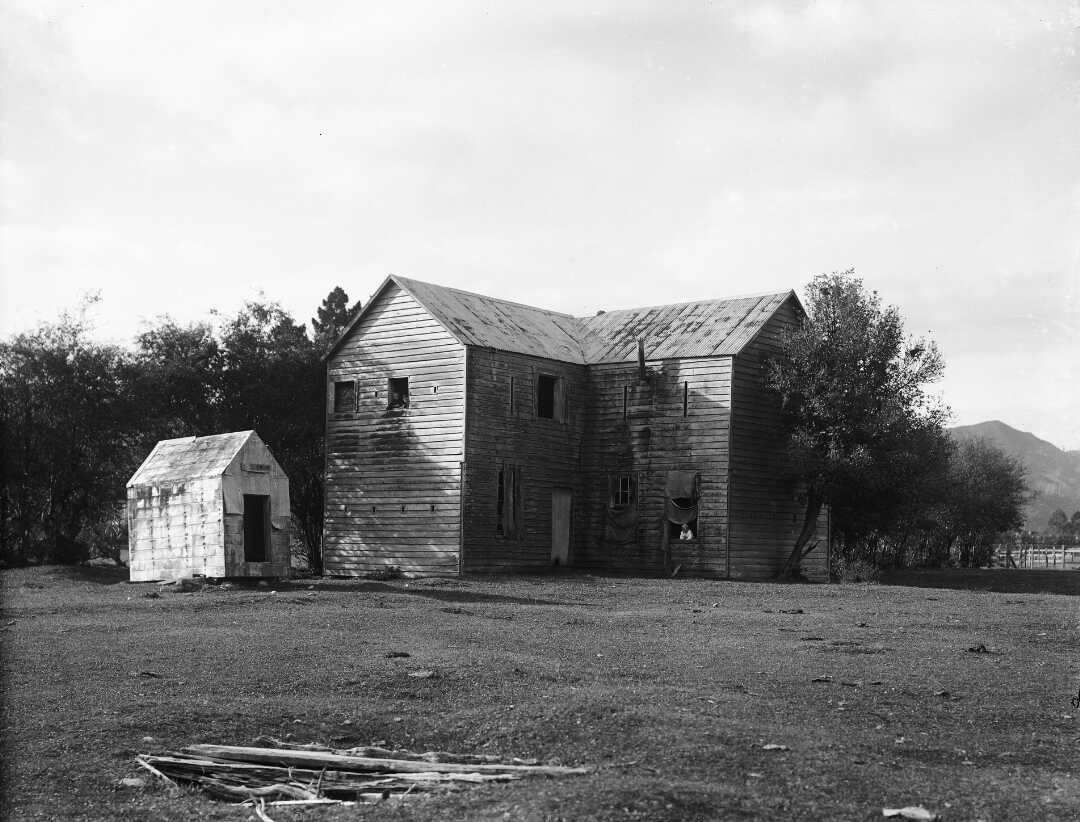
The two-storeyed blockhouse was designed by Colonel Thomas Rawlings Mould of the Royal Engineers and erected in the centre of the existing Upper Hutt settlement. The L-shaped building was at the north corner of a nine foot [three metre] high stockade atop a large defensive earthwork. Constructed of local tōtara, the blockhouse was weatherboarded on the exterior and the interior lined with inch-thick boards. The cavity was filled with fine gravel to absorb the impact of gunfire. The exterior walls on both floors had a series of balistraria, or loop holes, through which guns could be fired. The holes were filled with tampions - shaped solid timber elements designed to fit into the loopholes. The ground floor had two large rooms, the larger of which contained the staircase and a small store room. The upper floor was one large space with long balistraria (narrow openings) facing inwards. The roof was of tōtara shingles.

A small militia initially occupied the blockhouse; however, as the feared attack never eventuated, they left in May 1861. From 1867, the place was used as a police house, courthouse and residence. In 1884, the building was occupied by the Lands and Survey Department. Five years later, control of the land was given to the Upper Hutt Council. In 1916, following representations from local people interested in the preservation of the blockhouse, the land was reserved under the Scenery Preservation Act 1908. The building was substantially repaired in 1927-1928 and windows added on the inner side of the L-shaped structure. By this stage the control of the blockhouse itself was vested in the Upper Hutt Council. From 1953 until the late 1990s, local boy scouts and girl guides used the building. It has also been used for meetings of the Upper Hutt Round Table.

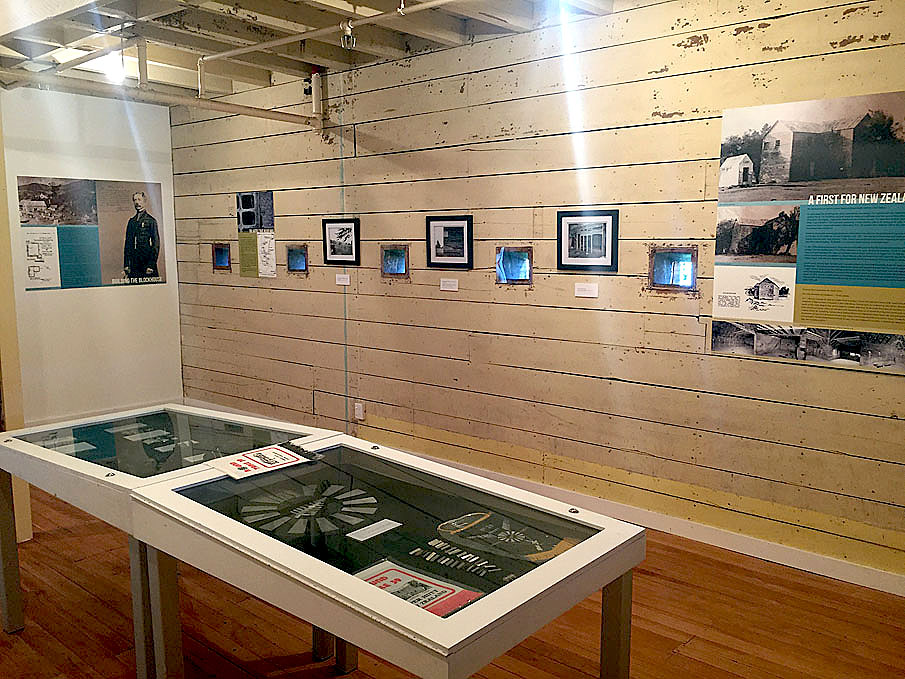
In 1980, the place was classified as a historic reserve under the Reserves Act 1977 and the New Zealand Historic Places Trust (now Heritage New Zealand) was appointed as manager. The earthworks have been flattened to form part of the school playing fields that now surround the blockhouse, however they are visible at times due to differential grass growth. In 2014, as well as some repiling and drainage improvements, the building was seismically strengthened, which required most of the river gravel to be removed from the wall cavities. The remaining gravel can now be viewed via a small panel in the wall.
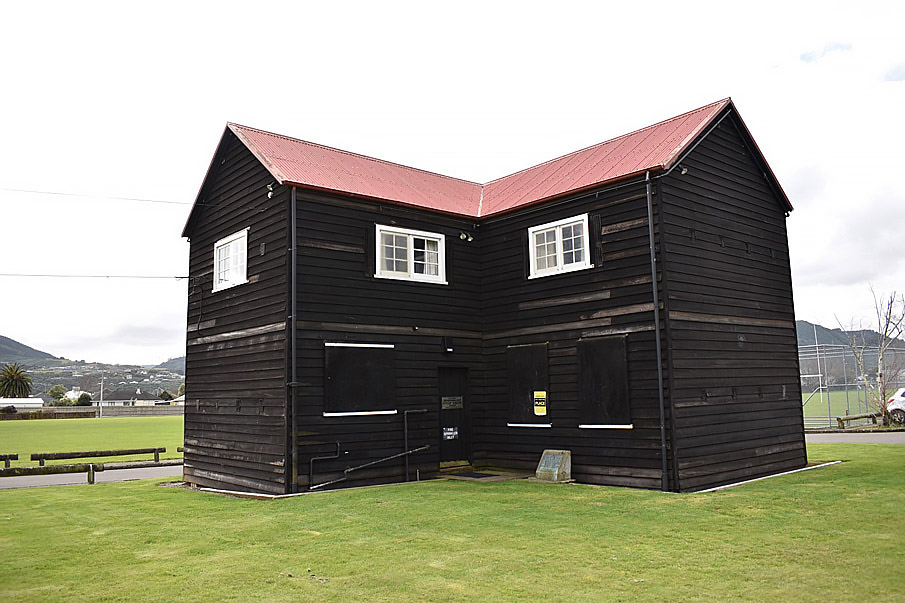
Upper Hutt Blockhouse (Former) | Jamie Douglas | 15/08/2019 | Heritage New Zealand
Upper Hutt Blockhouse (Former). The exterior walls on both floors had a series of balistraria, or loop holes, through which guns could be fired. The ground floor and top floor line of holes are joined by diagonal holes following the line of the interior staircase | Jamie Douglas | 15/08/2019 | Heritage New Zealand
Upper Hutt Blockhouse (Former). Interior display | Paulette Wallace | 20/11/2018 | Heritage New Zealand
Upper Hutt Blockhouse (Former). 1900 Blockhouse, Wallaceville, Upper Hutt. Ref: 1/2-027078-G. Permission of the Alexander Turnbull Library, Wellington, New Zealand, must be obtained before any re-use of this image. /records/23206127 | Unknown | Alexander Turnbull Library, Wellington
Upper Hutt Blockhouse (Former) | Jamie Douglas | 15/08/2019 | Heritage New Zealand
Upper Hutt Blockhouse (Former). The exterior walls on both floors had a series of balistraria, or loop holes, through which guns could be fired. The ground floor and top floor line of holes are joined by diagonal holes following the line of the interior staircase | Jamie Douglas | 15/08/2019 | Heritage New Zealand
Upper Hutt Blockhouse (Former). Interior display | Paulette Wallace | 20/11/2018 | Heritage New Zealand
Upper Hutt Blockhouse (Former). 1900 Blockhouse, Wallaceville, Upper Hutt. Ref: 1/2-027078-G. Permission of the Alexander Turnbull Library, Wellington, New Zealand, must be obtained before any re-use of this image. /records/23206127 | Unknown | Alexander Turnbull Library, Wellington

List Entry Information

Overview

Status
Listed

List Entry Status
Historic Place Category 1

Access
Able to Visit

List Number
207

Date Entered
25th September 1986

Date of Effect
25th September 1986

City/District Council
Upper Hutt City

Region
Wellington Region

Extent of List Entry

Extent includes the land described as Sec 723 Hutt District (NZ Gazette 1980, p.2702), Wellington Land District and the building known as Upper Hutt Blockhouse (Former) thereon. Extent does not include the building in the western corner of the land parcel, as shown on the extent map tabled at the Rārangi Kōrero Committee meeting on 2 June 2016.

Legal description

Sec 723 Hutt District (NZ Gazette 1980, p.2702), Wellington Land District

Detailed List Entry

Construction Professional

Name

Colonel Thomas Rawlings Mould, Royal Engineers

Type

Designer

Biography

No biography is currently available for this construction professional https://teara.govt.nz/en/biographies/1m56/mould-thomas-rawlings

Name

Corporal Tapp, Royal Engineers

Type

Builder

Biography

No biography is currently available for this construction professional

Construction Details

Start Year

1927

Finish Year

1928

Type

Modification

Description

Substantially repaired

Start Year

1989

Type

Modification

Description

Re-roofed

Start Year

1953

Type

Modification

Description

Windows and copper guttering installed. Creosote applied.

Start Year

1999

Type

Restoration

Description

Weatherboards repaired

Start Year

2014

Type

Structural upgrade

Description

Drainage improvements and foundation repairs; seismic strengthening including removal of most of the gravel from the wall cavities.

Reference

Public NZAA Number

R27/146

Completion Date

29th April 2016

Report Written By

Amanda Mulligan

Information Sources

Alexander, 1959

John H. Alexander, Historic Wellington, A.H and A. W. Reed, Wellington, 1959

Evans, 1975 (2)

M. E. Evans, 'Research Report on Upper Hutt Blockhouse', held on file, NZHPT, Wellington, 1975

Kelleher, 1991

J. A. Kelleher, Upper Hutt: the history, Upper Hutt, 1991

Millar, 1972

David Millar, Once Upon a Village, a History of Lower Hutt, 1819-1965, Wellington, 1972

New Zealand Gazette

New Zealand Gazette

New Zealand Gazette

New Zealand Gazette

Conservation Plan

Conservation Plan

Best, 1921

Best, E. Old redoubts, blockhouses and stockades of the Wellington District' Transactions of the New Zealand Institute, 1921.

Report Written By

This place was identified as significant under previous legislation with different information requirements. It remains significant under the current legislation. There is opportunity under our legislation and policies to add to this information. Further information about this place may be available from the Central Regional Office of Heritage New Zealand Pouhere Taonga. Please note that entry on the New Zealand Heritage List/Rarangi Korero identifies only the heritage values of the property concerned, and should not be construed as advice on the state of the property, or as a comment of its soundness or safety, including in regard to earthquake risk, safety in the event of fire, or insanitary conditions. A fully referenced upgrade report is available on request from the Central Region Office of Heritage New Zealand

Further Information

Current Usages

Uses: Civic Facilities

Specific Usage: Historic Property

Former Usages

General Usage:: Accommodation

Specific Usage: House

General Usage:: Agriculture

Specific Usage: Barn

General Usage:: Civic Facilities

Specific Usage: Hall, Girl Guide/ Scout

General Usage:: Defence

Specific Usage: Blockhouse

General Usage:: Law Enforcement

Specific Usage: Courthouse

General Usage:: Law Enforcement

Specific Usage: Police station

Themes

Web Links

description: Visit the Upper Hutt Blockhouse

url: https://www.heritage.org.nz/places/places-to-visit/wellington-region/upper-hutt-blockhouse

Overview

Status

Listed

List Entry Status

Historic Place Category 1

Access

Able to Visit

List Number

207

Date Entered

25th September 1986

Date of Effect

25th September 1986

City/District Council

Upper Hutt City

Region

Wellington Region

Extent of List Entry

Extent includes the land described as Sec 723 Hutt District (NZ Gazette 1980, p.2702), Wellington Land District and the building known as Upper Hutt Blockhouse (Former) thereon. Extent does not include the building in the western corner of the land parcel, as shown on the extent map tabled at the Rārangi Kōrero Committee meeting on 2 June 2016.

Legal description

Sec 723 Hutt District (NZ Gazette 1980, p.2702), Wellington Land District

Status

Listed

List Entry Status

Historic Place Category 1

Access

Able to Visit

List Number

207

Date Entered

25th September 1986

Date of Effect

25th September 1986

City/District Council

Upper Hutt City

Region

Wellington Region

Extent of List Entry

Extent includes the land described as Sec 723 Hutt District (NZ Gazette 1980, p.2702), Wellington Land District and the building known as Upper Hutt Blockhouse (Former) thereon. Extent does not include the building in the western corner of the land parcel, as shown on the extent map tabled at the Rārangi Kōrero Committee meeting on 2 June 2016.

Legal description

Sec 723 Hutt District (NZ Gazette 1980, p.2702), Wellington Land District

Construction Information

Construction Professional

Name

Colonel Thomas Rawlings Mould, Royal Engineers

Type

Designer

Biography

No biography is currently available for this construction professional https://teara.govt.nz/en/biographies/1m56/mould-thomas-rawlings

Name

Corporal Tapp, Royal Engineers

Type

Builder

Biography

No biography is currently available for this construction professional

Construction Details

Start Year

1927

Finish Year

1928

Type

Modification

Description

Substantially repaired

Start Year

1989

Type

Modification

Description

Re-roofed

Start Year

1953

Type

Modification

Description

Windows and copper guttering installed. Creosote applied.

Start Year

1999

Type

Restoration

Description

Weatherboards repaired

Start Year

2014

Type

Structural upgrade

Description

Drainage improvements and foundation repairs; seismic strengthening including removal of most of the gravel from the wall cavities.

Construction Professional

Name

Colonel Thomas Rawlings Mould, Royal Engineers

Type

Designer

Biography

No biography is currently available for this construction professional https://teara.govt.nz/en/biographies/1m56/mould-thomas-rawlings

Name

Corporal Tapp, Royal Engineers

Type

Builder

Biography

No biography is currently available for this construction professional

Construction Details

Start Year

1927

Finish Year

1928

Type

Modification

Description

Substantially repaired

Start Year

1989

Type

Modification

Description

Re-roofed

Start Year

1953

Type

Modification

Description

Windows and copper guttering installed. Creosote applied.

Start Year

1999

Type

Restoration

Description

Weatherboards repaired

Start Year

2014

Type

Structural upgrade

Description

Drainage improvements and foundation repairs; seismic strengthening including removal of most of the gravel from the wall cavities.

Reference

Historical and Associated Iwi / Hapū / Whānau

Public NZAA Number

R27/146

Completion Date

29th April 2016

Report Written By

Amanda Mulligan

Information Sources

Alexander, 1959

John H. Alexander, Historic Wellington, A.H and A. W. Reed, Wellington, 1959

Evans, 1975 (2)

M. E. Evans, 'Research Report on Upper Hutt Blockhouse', held on file, NZHPT, Wellington, 1975

Kelleher, 1991

J. A. Kelleher, Upper Hutt: the history, Upper Hutt, 1991

Millar, 1972

David Millar, Once Upon a Village, a History of Lower Hutt, 1819-1965, Wellington, 1972

New Zealand Gazette

New Zealand Gazette

New Zealand Gazette

New Zealand Gazette

Conservation Plan

Conservation Plan

Best, 1921

Best, E. Old redoubts, blockhouses and stockades of the Wellington District' Transactions of the New Zealand Institute, 1921.

Other Information

This place was identified as significant under previous legislation with different information requirements. It remains significant under the current legislation. There is opportunity under our legislation and policies to add to this information. Further information about this place may be available from the Central Regional Office of Heritage New Zealand Pouhere Taonga. Please note that entry on the New Zealand Heritage List/Rarangi Korero identifies only the heritage values of the property concerned, and should not be construed as advice on the state of the property, or as a comment of its soundness or safety, including in regard to earthquake risk, safety in the event of fire, or insanitary conditions. A fully referenced upgrade report is available on request from the Central Region Office of Heritage New Zealand

Historical and Associated Iwi / Hapū / Whānau

Public NZAA Number

R27/146

Completion Date

29th April 2016

Report Written By

Amanda Mulligan

Information Sources

Alexander, 1959

John H. Alexander, Historic Wellington, A.H and A. W. Reed, Wellington, 1959

Evans, 1975 (2)

M. E. Evans, 'Research Report on Upper Hutt Blockhouse', held on file, NZHPT, Wellington, 1975

Kelleher, 1991

J. A. Kelleher, Upper Hutt: the history, Upper Hutt, 1991

Millar, 1972

David Millar, Once Upon a Village, a History of Lower Hutt, 1819-1965, Wellington, 1972

New Zealand Gazette

New Zealand Gazette

New Zealand Gazette

New Zealand Gazette

Conservation Plan

Conservation Plan

Best, 1921

Best, E. Old redoubts, blockhouses and stockades of the Wellington District' Transactions of the New Zealand Institute, 1921.

Other Information

This place was identified as significant under previous legislation with different information requirements. It remains significant under the current legislation. There is opportunity under our legislation and policies to add to this information. Further information about this place may be available from the Central Regional Office of Heritage New Zealand Pouhere Taonga. Please note that entry on the New Zealand Heritage List/Rarangi Korero identifies only the heritage values of the property concerned, and should not be construed as advice on the state of the property, or as a comment of its soundness or safety, including in regard to earthquake risk, safety in the event of fire, or insanitary conditions. A fully referenced upgrade report is available on request from the Central Region Office of Heritage New Zealand

Further Information

Current Usages

Uses: Civic Facilities

Specific Usage: Historic Property

Former Usages

General Usage: Accommodation

Specific Usage: House

General Usage: Agriculture

Specific Usage: Barn

General Usage: Civic Facilities

Specific Usage: Hall, Girl Guide/ Scout

General Usage: Defence

Specific Usage: Blockhouse

General Usage: Law Enforcement

Specific Usage: Courthouse

General Usage: Law Enforcement

Specific Usage: Police station

Web Links

description: Visit the Upper Hutt Blockhouse

url: https://www.heritage.org.nz/places/places-to-visit/wellington-region/upper-hutt-blockhouse

Current Usages

Uses: Civic Facilities

Specific Usage: Historic Property

Former Usages

General Usage: Accommodation

Specific Usage: House

General Usage: Agriculture

Specific Usage: Barn

General Usage: Civic Facilities

Specific Usage: Hall, Girl Guide/ Scout

General Usage: Defence

Specific Usage: Blockhouse

General Usage: Law Enforcement

Specific Usage: Courthouse

General Usage: Law Enforcement

Specific Usage: Police station

Web Links

description: Visit the Upper Hutt Blockhouse

url: https://www.heritage.org.nz/places/places-to-visit/wellington-region/upper-hutt-blockhouse

Location

Loading
Related listings
Pungarehu Blockhouse (Former), Pungarehu. 2015
Pungarehu Blockhouse (Former)
Blockhouse
Onehunga Blockhouse
Cameron Blockhouse, Whanganui
Cameron Blockhouse
Blockhouse
Onehunga Blockhouse
Pungarehu Blockhouse (Former), Pungarehu. 2015
Pungarehu Blockhouse (Former)
Cameron Blockhouse, Whanganui
Cameron Blockhouse
Stay up to date with Heritage this month